R. M. True
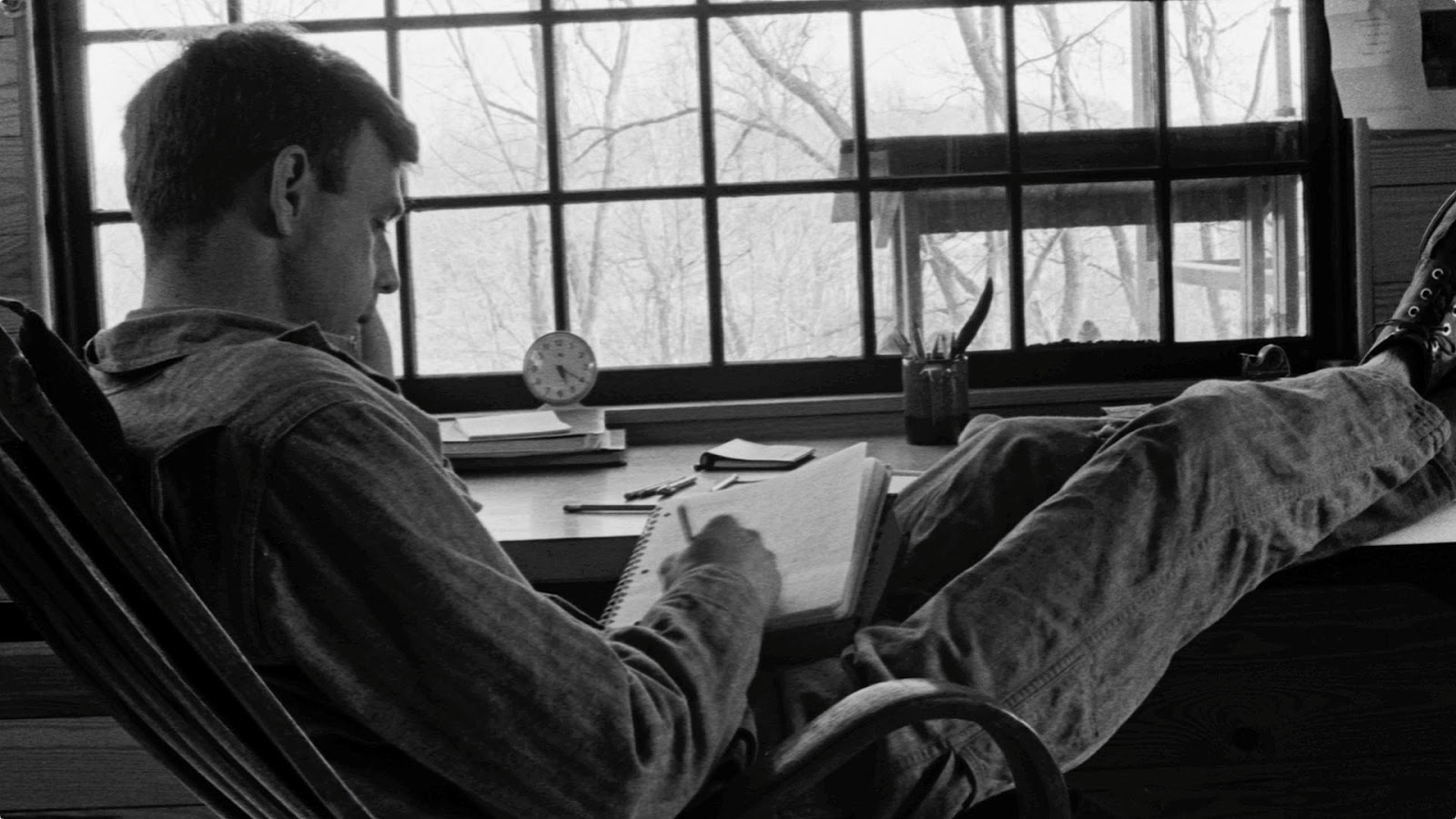
Yesterday, while holding my daughter less than a day after her birth, I learned that Wendell Berry had passed away.
The timing was difficult to ignore, though perhaps not for the reasons one might expect. Death and birth are often pressed into service as symbols, and perhaps there is some truth in that. Yet as I sat there with her asleep in my arms, I found myself thinking less about what had ended than what had been handed forward.
For much of his life, Berry wrote against a culture increasingly obsessed with the new. His attention was fixed elsewhere: on continuity, inheritance, place, and obligation. He understood that every generation is merely a temporary steward of things far older and more important than itself. Land passes from hand to hand. Communities endure only if someone chooses to care for them. Children inherit not only property and possessions, but habits, responsibilities, stories, and ways of understanding the world.
Holding my daughter, it struck me that Berry’s writings were always intended to outlast Berry.
The work was never about the man.
The work was about the things that remained after him.
I encountered those things long before I encountered his books.
I was raised in rural Kentucky among many of the same forces that shaped him. The passing seasons were not abstractions but realities that governed daily life. Gardens, livestock, weather, and family all occupied their rightful importance. There existed, perhaps imperfectly but genuinely, the understanding that one’s relationship to a place carried certain responsibilities.
Long before I read a line of Berry, I had been exposed to the very ideas that animated his work.
My grandfather completed the introduction.
The two attended part of high school together many years ago and remained acquainted through the peculiar circuitry of Kentucky life, where decades may pass without diminishing a friendship. From my earliest memories to my young adulthood, I spent countless hours listening to my grandfather’s stories. He was a farmer, attorney, and raconteur. Much of my fascination with old farms, old people, local history, and Kentucky’s disappearing ways can be traced directly back to him.
If Berry provided language for many of my convictions, my grandfather provided many of the convictions themselves.
In the summer of 2014, while studying engineering at the University of Kentucky, I found myself at a fork in the road. I respected engineering and the usefulness it served for communities, yet I remained stubbornly drawn toward writing. While my classmates devoted evenings to studying for exams and laboratory reports, I often spent mine writing about local places, conservation, and the environment. I had even begun fictionalizing my homeplace of Bedford, KY as Bedlam and Trimble County, KY as Bluegrass County, naively believing I had discovered something entirely original before learning that a writer a county over had done much the same thing years earlier and considerably better.
Unsure what to make of this confusion, I brought it to my grandfather.
“I know someone who might be of help,” my grandfather offered, rubbing his chin. “My old friend Wendell.”
As soon as I could ask who on earth is Wendell Berry?, my grandfather pulled out his rolled-up yellow pages and called Tanya and scheduled a visit to Lane’s Landing for the following day.
It remains one of the greatest favors anyone has ever done for me.
It also remains one of the least effective literary introductions imaginable.
The four of us sat around the Berry dinner table while Tanya offered coffee. Wendell and I exchanged what I remember now as mutually curious looks across the room, both of us seemingly aware that a conversation regarding writing was somewhere within reach. Unfortunately, my grandfather had other plans.
What followed was less a discussion and more a one-man monologue covering subjects that included local history, county politics, farms, former farms, people who once lived on those farms, and assorted matters of urgent importance known only to retired county attorneys. Every attempt the conversation made toward writing was promptly intercepted and redirected.
The stated purpose of the visit had been me.
The actual purpose, it turned out, was my grandfather.
At the time I was mildly frustrated.
Years later I recognized the deeper truth. Much of my unfinished memoir, True Stories: As Told by Meathead, revolves around precisely these kinds of contradictions. The people we love most are often simultaneously the source of our greatest opportunities and our greatest frustrations. Two encounters with Berry ultimately found their way into the working manuscript, not because they involved Wendell, but because they revealed something essential about the people and values that shaped me.
What I remember most clearly from that afternoon is not literature but humility. Here sat a man whose influence I would only later begin to understand, taking a break from ordinary labor to welcome visitors into his home. At the time, I knew he had written books, taught at the University of Kentucky, and enjoyed a measure of success. I had little understanding of the scale of his contributions.
That realization arrived later.
During graduate studies at Texas Tech, my academic work increasingly revolved around stewardship, community, environmental responsibility, and community identity. Again and again I found a familiar name. Increasingly, my bibliographies began reading like partial inventories of Berry’s collected works.
The deeper I ventured into Berry’s essays, novels, poems, and public work, the more difficult it became to separate them from questions I had already been asking myself. He was not merely writing about agriculture or conservation. He was writing about relationship. The relationships between people and land, economies and communities, freedom and responsibility, inheritance and obligation.
More importantly, he provided coherence.
Many of my concerns for Kentucky already existed, but often as separate instincts. I cared about small communities. I cared about environmental health. I cared about family farms, local culture, and the fate of rural places. Berry demonstrated that these concerns were not separate at all. Stewardship of land, water, economy, culture, and community rise and fall together.
Engineering offered tools.
Berry offered orientation.
His work became the calibration of the compass.
During those years it became increasingly clear that engineering, writing, conservation, local history, environmental stewardship, and community development were not competing interests. They were different expressions of the same concern. Berry spent decades articulating the moral dimensions of stewardship. My own inclination was toward implementation: helping communities navigate growth without surrendering themselves to it, promoting sound planning, protecting surface and groundwater resources, examining environmental impacts, and applying technical expertise in ways that strengthened rather than weakened local places.
Five years after our visit to Lane’s Landing, I had the opportunity to see Berry again.
In the summer of 2019, my grandfather and I attended a Planning and Zoning hearing in New Castle concerning a proposed distillery development in Henry County. Representatives for the project argued that the investment would create jobs and strengthen the local economy. I distinctly remember one attorney acknowledging that it was difficult to stand opposite Berry himself, admitting his respect for the man despite disagreeing with him.
When Berry spoke, he did not sound much different than he did on the page.
His concerns were practical rather than ideological. He questioned the wisdom of becoming too quick to exchange local stewardship for outside investment and argued that Henry County’s future might be better secured through local ownership, agriculture, and community responsibility than through another corporate promise of prosperity.
The commission listened respectfully.
Several members acknowledged the validity of his concerns.
Ultimately, they voted against him.
Afterward, Berry gathered his papers, slipped them into his coat pocket, shook my grandfather’s hand, shook mine, and asked how my writing was progressing.
The exchange lasted only a moment, but I remember it all these years later. Five years had passed since our visit to Lane’s Landing. That original conversation had been largely consumed by my grandfather’s enthusiasm for subjects unrelated to writing. Yet somehow Berry remembered both me and the aspiration I carried into his home that afternoon.
Then, with Tanya at his side, he walked toward the door.
The vote had gone against him.
His demeanor had not changed in the slightest.
Looking back, I have come to regard that evening as its own lesson in stewardship.
The distillery obtained the farm.
The vote stood.
The machinery of development continued as intended.
Yet influence moves through communities in ways that meeting minutes and zoning maps cannot measure. Property ownership may change in a matter of months. Ideas travel more slowly. They pass from neighbor to neighbor, parent to child, teacher to student, bearing fruit long after the original argument has faded.
The arguments Berry made that evening did not remain in the courthouse.
They departed with those willing to carry them.
They certainly departed with me.
My grandfather before his passing encouraged me to reach out to Wendell more often over the years. Every few months he would suggest sending an essay, a manuscript, or some half-finished project.
I never did.
Partly because the work never seemed ready.
Partly because life has a way of occupying one’s attention.
And partly because I came to understand that the relationship I sought with Berry already existed. Many of the circumstances preventing me from pursuing a formal mentorship were the very circumstances through which Berry’s influence was already being expressed.
There were years when I scarcely spoke to Berry, yet found myself returning continually to his ideas. The dialogue persisted not through correspondence but through circumstance. It unfolded while building a career, starting a family, grieving the loss of my grandfather, caring for livestock, serving communities, and attempting, however imperfectly, to practice the very stewardship Berry spent a lifetime describing. Looking back, I suspect there was less distance between mentor and student than I once imagined.
In these respects, Berry was present far more frequently than I, until learning of his passing, had realized.
His influence ultimately found one of its clearest expressions in the work I now pursue through The Kentucky Steward LLC.
If Berry supplied the philosophy, I became increasingly interested in the mechanics.
My own work has centered on applying engineering, environmental planning, community development, conservation, and creative communication toward the places that matter most to me. The mission is neither grand nor original. It is simply an attempt to serve Kentucky’s communities; its rivers, fields, forests, towns, and people; with whatever ability and stubbornness I possess.
Berry spent a lifetime reminding us that stewardship is not a sentiment. It is a practice.
A practice and, frankly, a duty requiring labor and patience and accepting that many worthwhile efforts may not succeed immediately, and some may not succeed at all.
What matters is faithfulness to the work.
In that regard, I often find myself returning to the image of Berry leaving the courthouse. Not because he lost a vote. People lose votes every day. What remains memorable is his refusal to measure success solely by outcomes. Stewardship requires planting trees whose shade we may never enjoy. It requires defending communities whose future cannot yet be seen. It requires believing that careful work today may benefit someone decades from now.
Perhaps that is why his passing feels less like an ending than a transfer of responsibility.
The idealist may pass into the deep and fertile soil of the earth, but the idea remains. And if tended properly, ideas possess a remarkable ability to grow taller than those who first planted them.
Perhaps that is the real measure of stewardship. Not whether one’s efforts succeed in every particular instance, but whether the values behind them continue finding expression in the lives of others. Berry’s writings sharpened instincts I already possessed and helped direct them toward meaningful work. They continue to inform how I understand engineering, conservation, community, family, and Kentucky itself. The steward passes. Stewardship remains.
Last night, after bringing my daughter home, I stepped outside and made my way toward Drennon Creek.
The sheep were already settled into the pasture and the last light was draining from the valley. Somewhere beyond the ridges and roadways and meeting rooms and obligations of modern life, one of Kentucky’s great stewards had completed his work. Here, however, the creek continued exactly as it had the night before.
For a few years now I had submitted myself to the wildness of the lower creek hollow encompassing my farm whenever the world’s noise grew too loud. Standing there, I found myself thinking less about Berry’s passing than the persistence of the things he spent his life defending. The creek continued its course. The trees held their ground. The wild things attended to their evening occupations. The names change, but the responsibilities remain. The work of stewardship, like the water itself, continues onward.
“Downstream”, or The Peace of a Steward’s Passing
When the evening birds seem restless to me
and their songs carry an unfamiliar melody,
I leave the lighted house and go down into the creek hollow
beneath the trees. For a time I stand among wild things
and listen to the water over silt and stone through the gathering
dark, and a harmony rising from the current and settling again into silence.
The creek rushes through drought and flood alike as it always has,
bearing the season given to it and carrying onward what comes before.
And standing where that ceaseless water passes in the growing dark,
I hear in it something older than memory and lighter than
grief, something continually given and continually received.
And I think of those who have entered the earth before me,
whose labor remains though their hands have gone from it,
and whose care still moves quietly through the world like water
finding its course. For a while I rest in the peace of wild things
and am strengthened by the same current that strengthened those before me.
Then I return from the hollow toward the light of home,
atop the land I love, carrying what has been handed downstream,
and am ready again for the noise of tomorrow.
The Kentucky Steward remains my attempt to put these convictions into practice through engineering, environmental stewardship, creative work, and service to Kentucky’s communities. The tools may differ from Berry’s, but the work remains much the same.
Leave a Reply