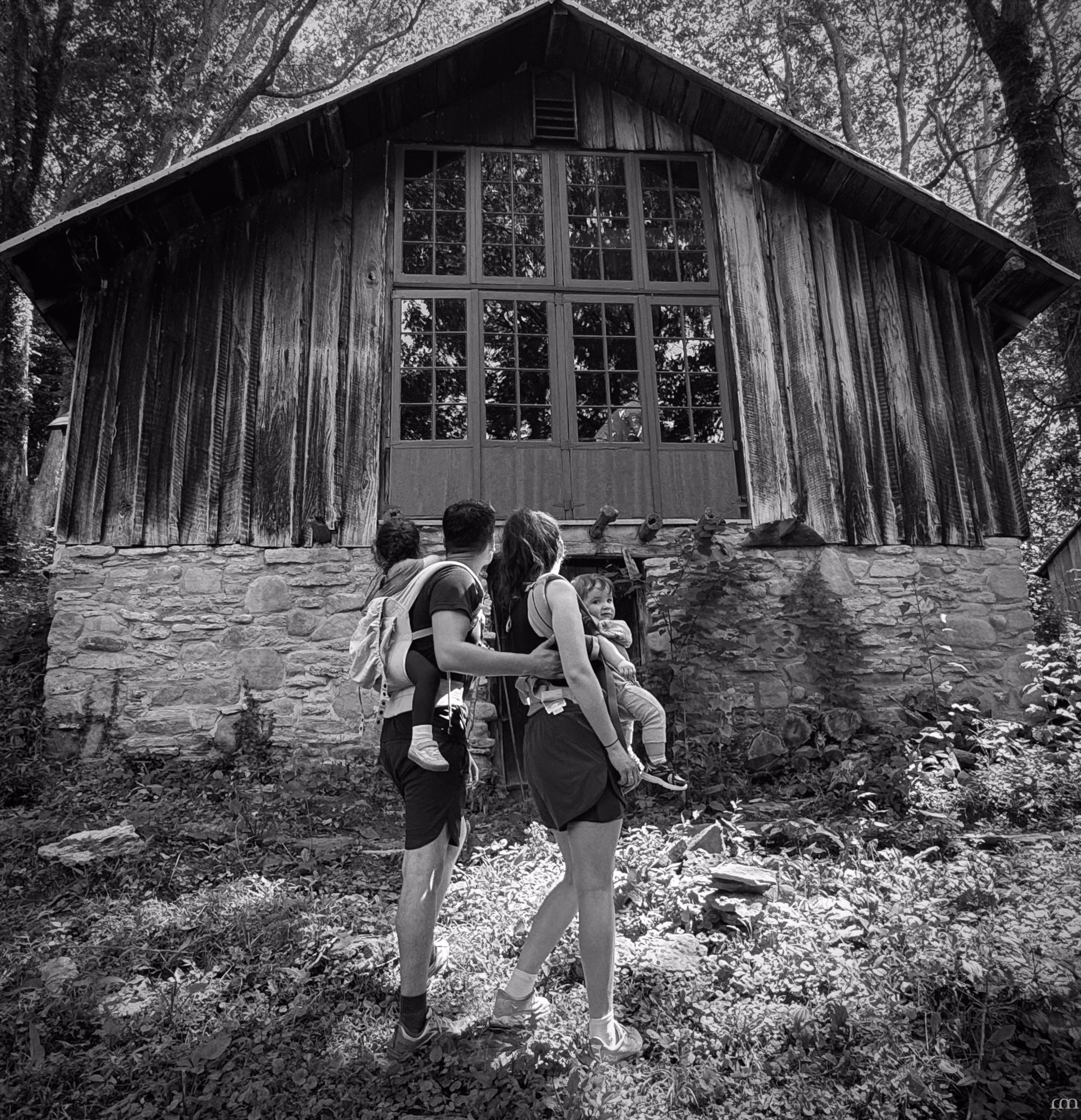
The Kentucky Steward LLC, R. M. True
The Kentucky Steward LLC Returns to Payne Hollow
In June 2024, The Kentucky Steward LLC returned to Payne Hollow to witness some trail erosion remedies that were designed upon request by Payne Hollow on the Ohio—the non-profit that has assumed the care and stewardship of Harlan and Anna Hubbard’s place of refuge on the fringe of society.
The Visit
Although I had visited Payne Hollow a handful of times, the last was perhaps most special. Mrs. Kentucky Steward and I brought with us The Little Stewards, our nearly three-year-old daughter and nearly one-year-old son.
We have exercised the liberty in calling them The Little Stewards because it has been our primary objective to introduce them to, as well as foster for them, a world of stewardship through as many lenses their minds and hearts can absorb. To date, they live and grow among livestock, hayfields, a winding—and nearly always flowing—creek, all of which are encompassed by a variety of tree species with birds and insects and as little modernity as possible.
We were mindful, as parents must, of how our children were taking in the world. A world where they would figuratively consume it, rather than literally.
Of course, no steward is perfect, and so no attempt or act of stewardship is perfect. But try we might. And our efforts, as most parents understand, we have realized are always seen, heard, absorbed by ever-watchful, growing eyes. Growing more speculative, inquisitive, judging, absorbing by the day.
And so, on a humid June morning we thought the idea of taking them to Payne Hollow as naturally as one laces up a boot. I wore my daughter on my back, my dear wore our son on her front, and we were led by Mr. Joe Wolek and Mr. Stacey Burkhardt (two board members of Payne Hollow on the Ohio) down the one-mile path to the Hubbard homestead.
“We’re going to Payne Hollow,” I reminded my daughter who rested smirking behind my ear.
“Harlan and Anna Hubbard at Payne Hollow,” she replied. She had practiced the phrase all morning.
My son smirked with every jolted step. My daughter asked questions, carefully annunciated, as birdsong filled the hollow.
For the little stewards, as it was for Harlan and Anna, Payne Hollow was a new departure.
“We looked forward to fresh experiences and to grow into something we were not before.” Harlan writes, “who knows what can develop, if time and place are right?” (p. 75)
“We’re going to see Harlan and Anna?” My daughter asked.
“No,” I said. “But we will see the life they built and left for us.”
“Mhmm. I’m ready to go!”
We stopped at key locations—places marked by the Hubbards and the generations of farming families before them. I thought of them all, now passed. My 90 year old grandfather among them, gone just months before.
“The old-timers are children of the soil,” Harlan said. “As each one passes away, an empty space is left which will not be filled by the rising generation, formed under urban influences.” (p. 134)
The still river and Payne Hollow itself soon filled my daughter’s eyes with not a semblance of urban influence about us.
We climbed the rock-stepped path to the Hubbard home and all looked up in wonder of its humble prestige.
“Payne Hollow”, my daughter said.
My son cooed nonsense in agreement.
“Yes it is,” I said. “Let’s go inside and see how Harlan and Anna lived.”
Mr. Wolek offered the greater tour group some of the infinite stories and factoids about this-and-that item about the place, all positioned and well-kept just as they were for the Hubbard’s for decades.
My dear, daughter, and son stared longingly out of the tall windows facing the river and supped the rising sun through the glass like a cup of spring water. We stood in the Hubbard’s living room, which was also their kitchen, dining room, a bedroom, and laundry room when the occasion called for it to be.
Wherever one looks in the home of Payne Hollow it is easy to observe and respect the craftsmanship of Harlan, and Anna too.
Constructed in part from felled trees on the very hillside it was built into and creek rock from the creek below and driftwood from the infinite upstream supply of the Ohio, with sawn boards and other scantlings from nearby sawmills and glass, tin, and nail purchased from local artisans, Payne Hollow felt less like a museum or memoriam and more like a church. Rather, an equally holy place, yet less formal with no gravity of the goings-on of society.
Anna’s craftsmanship was felt in the warmer corners of the home. The brick-and-mortar fireplace, strong and uncrackable, partially enclosing her wood stove. The intricacy of the cabinetry. My daughter investigated the many knick-knacks and drawers—some of which were upside down, repurposed oil paintings by Harlan—and no battery-powered toys or over-stimulation could be found.
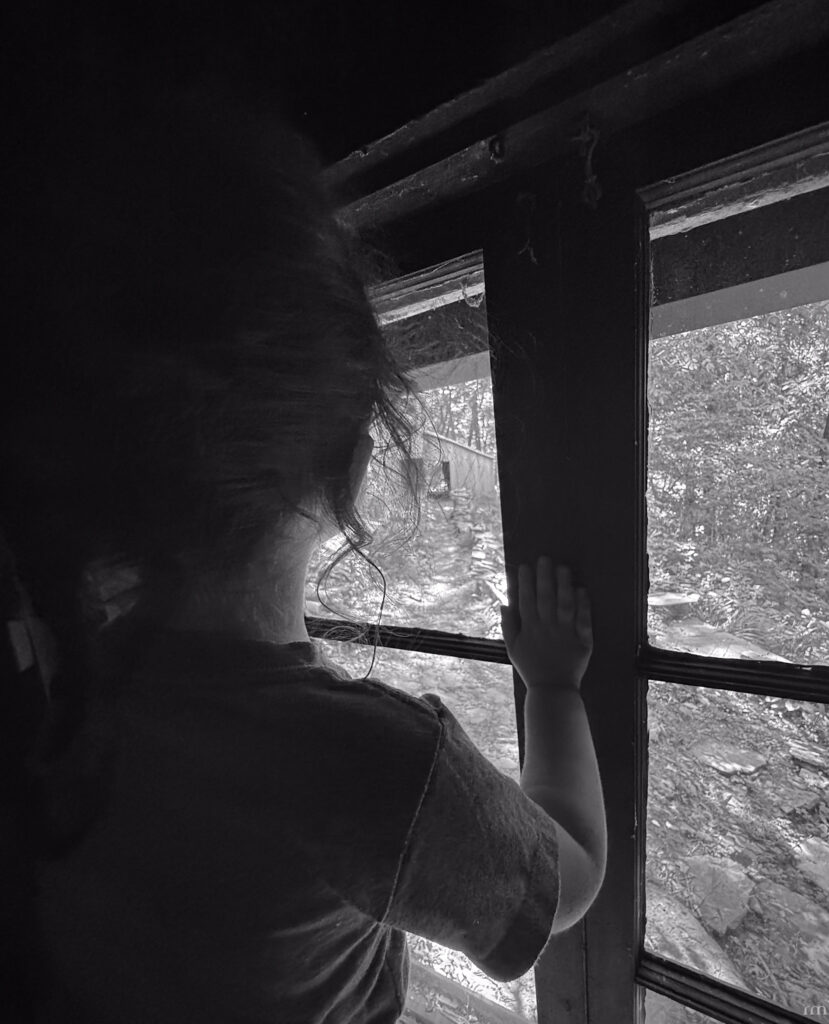
Of the few items in the home, Harlan was right, it seemed “everything inside was given constant use and loving care.” Each item and area maintained a multitude of uses and purposes.
My family, with our everyday eyes, found wisdom in every corner of the place. And though the corner where Anna’s Steinway and Sons rested was empty, there remained music in the home.
With all these ideals and qualities, how could my dear and I not emulate the Hubbard’s lifestyle in as many ways as we could? How was this grandiose, yet simple lifestyle livable, and for so long and so consistently lived well?
How might I return one day to Payne Hollow and by my renewed circumstance, it feel not as a church but more like my own home than some holy place I aspire to cleanse the dirtiness of society that increasingly blights my resolve.
“Littling along”, Harlan says (148). Littling along, and living hand to mouth and having simple tastes and inexpensive pleasures. Faith plus imagination.
I could see my thoughts stirring in my dear’s eyes for they were shared thoughts. There was much to consider and many revisions to be made to the farm and for the little stewards. With some changes more difficult to make than others, of course.
The morning had turned to daybreak, and our son was hot and sweaty, and the breeze throughout the hillside had stopped. Fearing the little stewards overheating, we said our goodbyes to the group and made way for the car.
The Ohio at our back flowed on in its endless form now guiding countless speed and bass boats and coal barges where there were once shanty boaters and steamboats and paddle-wheelers.
Despite such evolution, Payne Hollow remains as Harlan and Anna had left it nearly 40 years ago.
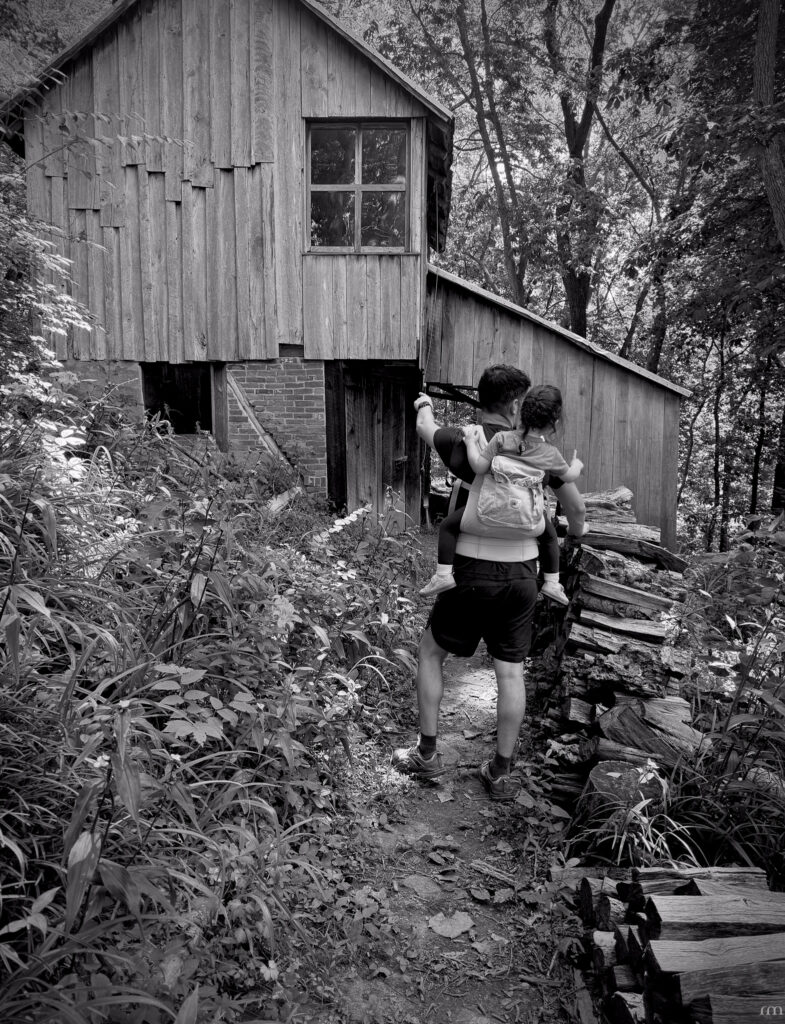
Up the pass my daughter requested she walk the rest of the way, stopping every few steps to investigate a flower or tree or the bugs that jump from one to the other. My son watching her intently unable to walk just yet.
I watched them not as the little stewards they were but for the stewards they would become. How would they live and contribute to a world inwrought with everything the Hubbard’s stood against? How might society grow by their hand and voice?
The Answer
To grow within and atop nature like some weed, or well-tended garden vegetable. To see and hear the creek and chart its course by the storm. Less TV and news. Less noisy gizmos and gadgets and more play. To be near livestock and proximal to stewardly vocations. To learn by example from stewards of engineering, education, agriculture, healthcare, the like. To be part of a society that is both furthering and green, and to choose when best to live aside from it for reflection and to sigh and breathe in fresh air in forest or valley.
To work with their hands and stay on their feet.
Harlan clarifies the last: “The young men and women of today who are eager to live on their own-how can they come by the necessary skill with their hands, the knowledge of building and planting? Or be inspired by a love of tools and hand-work in these days of prefabrication and power? They should be aware that their shortcomings cannot be remedied by overconfidence, but with a strong enough desire, and faith, patience and time they can achieve in their own fashion whatever they undertake.”
We rose out of Payne Hollow and returned to our farm in short time. The baaing of a flock and their guardian Jenny hee-hawing to greet us home.
It was plain to see our home was no Payne Hollow, of which there was only one. But after returning, we have found ourselves littling along in pursuit of an ideal—a peace worth living for, preserving, bettering each day.
There are no perfect stewards and so there is no perfect stewardship. There remains for now toys with batteries, store bought milk, and for myself countless emails and texts. But there have been little improvements by the day. The hens are now laying, and the old garden plot hollers out to us for our imperfect hand-work.
We returned from Payne Hollow with wisdom and direction. And soon after the unshakable weight of the fast world encumbering our minds.
But, my dear and I and the little stewards were outside when the sun set.
______________________________
steward the state!
In the next few years The Kentucky Steward LLC intends to publish a children’s book series–The Little Steward Series–that feature the many facets of stewardship in Kentucky from a child’s point of view.
To stay up to date with all things Payne Hollow visit https://www.paynehollowontheohio.org/.
Leave a Reply to Randy Flaherty Cancel reply